
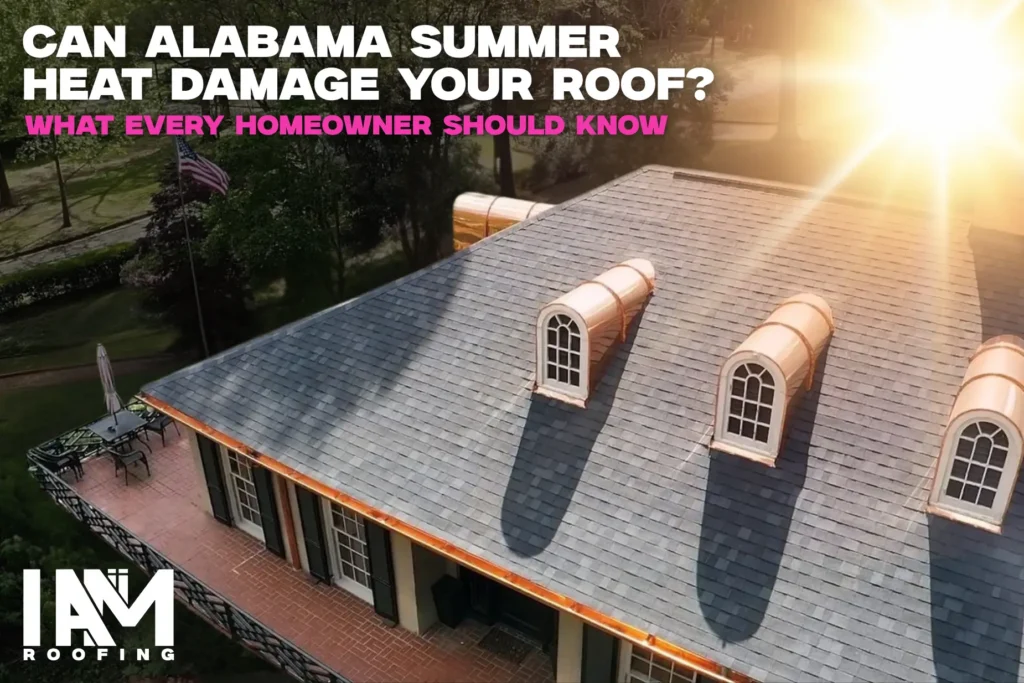
Yes — summer heat can damage your roof, and it usually happens quietly, long before a leak ever shows up inside your home.
The short answer to whether can heat damage your roof is real is simple: extreme temperatures wear down roofing materials from the top layer down, weakening shingles, warping flashing, and stressing your attic long before you notice a problem at ground level. At I AM Roofing, we see the effects of Alabama summer heat roof damage every year, and the good news is that most of it is preventable once homeowners know what to look for.
Summer in Alabama often stretches from May through September, giving roofs months of sustained heat exposure with very little overnight relief. That extended window is exactly why a minor issue in June can turn into a major repair by August, and why homeowners who wait until they see an interior leak are usually looking at a bigger job than if they’d caught the problem early.
How Summer Heat Actually Damages a Roof
Roofs are built to handle heat, but Alabama summers push most roofing systems past what they were designed to comfortably absorb. As temperatures climb, asphalt shingles expand during the day and contract again at night. That repeated expansion and contraction is one of the leading causes of summer roof damage, and over time it leads to cracking, curling, and granule loss that weakens a shingle’s ability to shed water and block UV rays.
Direct sun exposure adds a second layer of stress. Ultraviolet rays break down the oils and asphalt binders that keep shingles flexible, a process called oxidation. Once shingles oxidize, they become brittle, and brittle shingles are far more prone to shingle damage from heat during summer storms, high winds, or even routine foot traffic from maintenance work.
Heat doesn’t stop at the shingles, either. Attics that aren’t properly ventilated trap hot air, sometimes reaching temperatures well above the outdoor air. That trapped heat can warp roof decking, degrade insulation, and shorten the lifespan of the entire roofing system — which is why ventilation is just as important as the shingles themselves when it comes to summer performance.
Warning Signs of Heat Damage on Your Roof
Most signs of roof heat damage develop gradually, so it helps to know what to look for before a small issue becomes a costly repair. Keep an eye out for:
- Curling, cracking, or blistering shingles, especially on south- and west-facing slopes
- Granules collecting in your gutters or at the base of downspouts
- Shingles that look faded, discolored, or visibly dried out
- Higher-than-normal indoor temperatures on the top floor of your home
- Rising cooling bills without an obvious explanation
- Soft or spongy spots on the roof deck, which can signal trapped heat and moisture underneath
If you notice any of these signs, it’s worth having a professional take a closer look before the damage spreads.
Why Alabama’s Climate Makes Heat Damage Worse
Alabama’s mix of high heat, heavy humidity, and intense summer sun creates conditions that are tougher on roofs than in most parts of the country. The specific challenges vary depending on where in the state you live, which is why I AM Roofing tailors its recommendations to local conditions rather than offering one-size-fits-all advice.
Central Alabama: Heat, Humidity & Storm Stress
Homeowners across Autauga, Elmore, Montgomery County, Lowndes, Lee, Tallapoosa, Chilton, Bibb, Shelby, St. Clair, Talladega, Calhoun, Etowah, Randolph, Tuscaloosa, Walker, and Jefferson County deal with a particular combination of high heat and humidity that keeps moisture trapped against the roof surface. When that heat and humidity pair up with Central Alabama’s frequent summer thunderstorms, roofs already weakened by sun exposure are more likely to suffer wind and hail damage as well.
Gulf Coast: Intense Sun & Salt Air Exposure
Farther south, homeowners in Baldwin, Mobile, Escambia, Washington, Monroe, Covington, Butler, Wilcox, Dallas, Perry, Crenshaw, Barbour, Houston, and Pike County face a different version of the same problem. Along the Gulf Coast, intense, near-constant sun combines with salt air to accelerate the breakdown of roofing materials, corrode metal flashing and fasteners, and speed up granule loss on asphalt shingles. That combination makes routine inspections especially important for coastal homeowners.
Roofing Materials That Hold Up Best in Alabama Heat
Not all roofing materials perform the same way under sustained heat. Among the best roofing materials for Alabama heat are architectural asphalt shingles with reflective or “cool roof” granules, which reduce how much heat the roof absorbs in the first place. Proper attic ventilation, radiant barriers, and light-colored roofing materials can all help lower attic temperatures and reduce the stress that heat places on the rest of the roofing system.
Choosing the right material matters, but installation quality matters just as much. A well-installed, moderately heat-resistant roof will often outperform a premium material that wasn’t installed with proper ventilation and flashing in mind. Our team walks homeowners through material options as part of every roof replacement conversation, so the final decision fits both the home and the budget.
Color plays a role too. Darker shingles absorb more heat than lighter shades, which can push attic temperatures even higher during peak summer months. If a roof replacement is on the horizon, it’s worth asking your contractor how shingle color, reflectivity, and ventilation will work together on your specific home, since the right combination depends on roof pitch, attic design, and how much direct sun the property gets.
How to Protect Your Roof This Summer
You can’t control Alabama’s climate, but you can protect your roof from summer heat with a few consistent habits:
- Schedule an annual roof inspection before peak summer heat sets in
- Keep attic ventilation clear and unobstructed so hot air can escape
- Clean gutters regularly so trapped debris doesn’t hold moisture against the roofline
- Trim overhanging tree branches that trap heat and moisture against the shingles
- Address minor issues quickly with professional roof repair before they widen under continued heat stress
A roof inspection Alabama summer heat demands is one of the simplest ways to catch problems early. Most roof maintenance in Alabama comes down to consistency — small, regular checks tend to prevent the expensive repairs that come from months of unnoticed heat exposure.
When to Call a Professional Roofing Contractor
If you’re already seeing curling shingles, granule loss, or rising energy bills, it’s time to bring in a professional rather than wait for the next storm to make the decision for you. A qualified roofing contractor can tell you whether a targeted repair will do the job or whether the extent of the damage points toward a full roof replacement.
For homeowners weighing the cost of a larger project, I AM Roofing also offers financing options to help make necessary roof work more manageable, and we provide commercial roofing services for business owners facing the same heat-related wear on a larger scale.
Frequently Asked Questions About Summer Heat and Roof Damage
Can summer heat actually damage a roof?
Yes — prolonged heat causes shingles to expand and contract, which accelerates granule loss, cracking, and premature aging, especially on south- and west-facing slopes.
What are the first signs of heat damage on a roof?
Common early signs include curling or blistering shingles, visible granule loss in gutters, and higher indoor temperatures caused by reduced attic ventilation.
Does Alabama’s humidity make heat damage worse?
Yes — trapped attic moisture combined with high heat speeds up wood rot and shingle deterioration, which is why proper ventilation matters as much as the roofing material itself.
What roofing materials hold up best in Alabama heat?
Architectural asphalt shingles with reflective or cool-roof granules, along with proper ventilation, tend to perform best against Alabama’s heat, humidity, and UV exposure.
How often should I have my roof inspected during summer?
A professional inspection at least once a year, plus after any severe summer storm, helps catch heat- and storm-related damage before it becomes a costly repair.
Can heat damage void my roof warranty?
Some manufacturer warranties require proper attic ventilation and timely repairs. Unaddressed heat damage left to worsen can affect warranty coverage, so early inspection matters.